

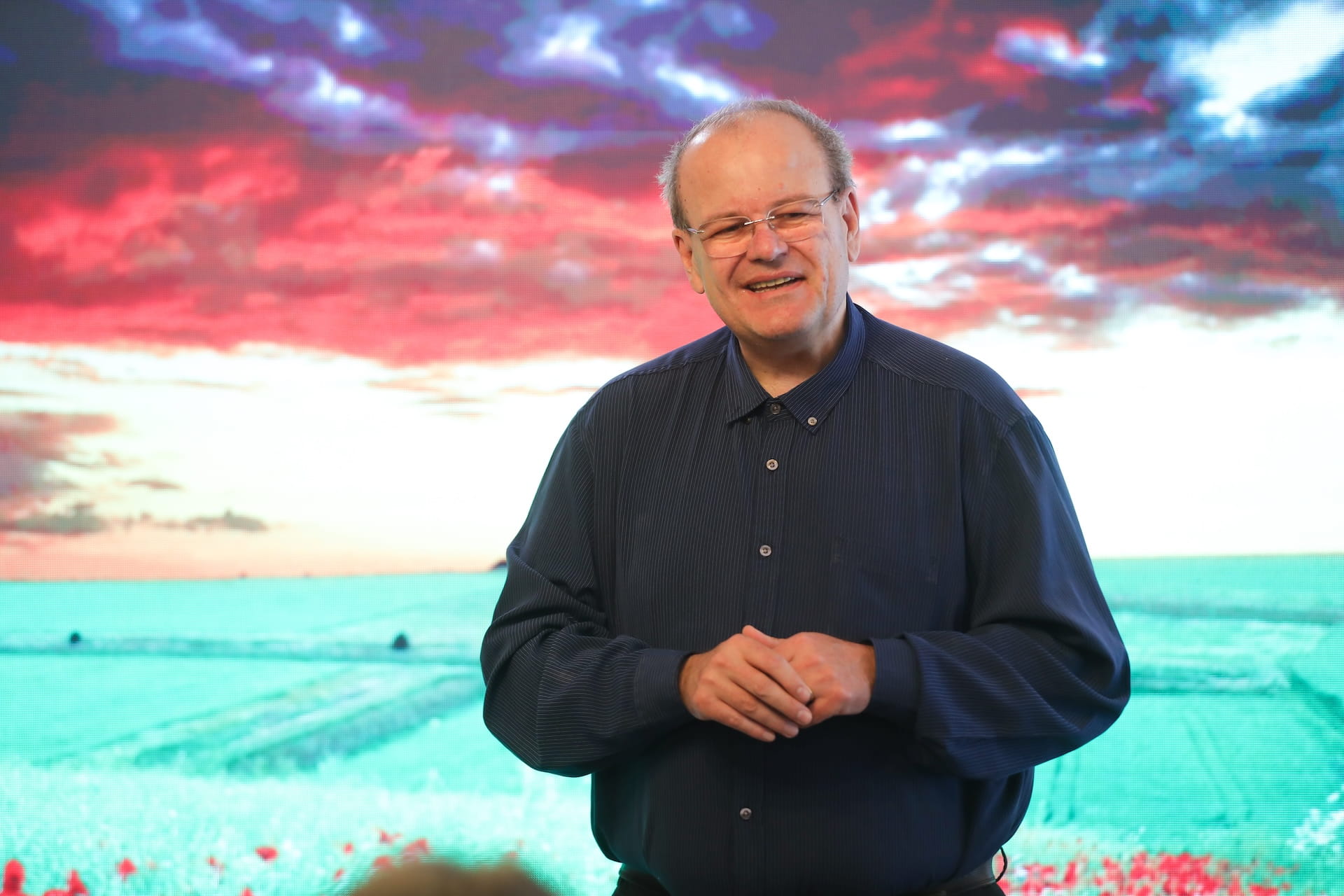
Advancing the Science of Forest Therapy: An Interview with Symposium Organizer Walter Ubelhart
The 2nd edition of the International Silvotherapy Symposium recently took place between May 29-30, 2026 near the secular forests of Băiuț, Maramureș. The event was organised by the Johannes Banfi Hunyades Multicultural Association from Baia Mare in partnership with WWF Romania. To understand the future of forest therapy (silvotherapy) and how cutting-edge research is shaping this emerging field, we sat down with the event’s organizer, biologist Walter Ubelhart—an author, entrepreneur, cultural figure, and representative of the Johannes Banfi Hunyades Multicultural Association from Baia Mare, who delivered a Presentation of the Silvotherapy Concept at the event.
In this interview, Mr. Ubelhart shares the inspiration behind the symposium, the healing mechanisms of old-growth forests, and how the presentations delivered by the Center for Complexity Studies team significantly raised the scientific quality and intellectual depth of the entire event.
Q: Mr. Ubelhart, you have a very diverse professional background. How did you become passionate about silvotherapy?
Walter Ubelhart: By profession, I am a biologist and an entrepreneur, but I am also deeply active in the cultural world as a writer and filmmaker. As a biologist, I became fascinated by silvotherapy—a relatively new field in Romania. We are incredibly fortunate that Băiuț, a location very dear to me, is surrounded by a massive area of secular (old-growth) forest, which provides the perfect environment for practicing this complementary therapy.
Q: What triggered the idea to turn this passion into an international scientific symposium?
Walter Ubelhart: My interest was initially sparked decades ago by a book written by Dr. Arcade Perțec from Bucharest during the communist era. However, things truly crystallized when my wife, who is a physician, began an in-depth study on the longevity of the population in Băiuț. This work culminated in this year’s landmark presentation: “Case Study on the Longevity of the Population in Băiuț (Medicine of the Future – Integrative Medicine)” by Dr. Coralia-Monica Ubelhar.
We discovered a longevity paradox that we could only attribute to the exceptional quality of the air, which is directly generated by this old-growth forest. To deepen my knowledge, I completed a specialization course at a private academy in Germany and began practicing. Last year, we hosted Romania’s first national silvotherapy symposium here in Băiuț, and this year, we expanded the concept internationally, welcoming guests from multiple countries.
Q: What makes the air and environment of a secular forest so uniquely therapeutic?
Walter Ubelhart: The old-growth forest in Băiuț holds an enormous biomass that captures massive amounts of carbon dioxide, resulting in exceptionally high oxygen levels in the air. This superior oxygenation leads to more alkaline blood levels in humans, which is scientifically linked to a reduction in severe, incurable diseases like cancer, while also significantly improving sleep quality. Furthermore, the local population relies heavily on forest products like mushrooms and berries. Berries such as blueberries and cranberries help reduce urinary diseases and improve vision. Even the light spectrum filtered through the forest canopy leans toward yellow, which is highly resting for the eyes; people here spend a lot of time in the woods, and the percentage of those wearing glasses is incredibly small.
Practically, the forest offers three crucial scientific health pillars: high oxygen levels, phytoncides (antimicrobial volatile organic compounds emitted by tree leaves that we can actively measure), and the underground mycorrhizae layer. In a secular forest, this underground network of fungal mycelium is 3 to 5 times thicker than in a standard forest. It functions as a single giant organism that can stretch up to 80 kilometers or weigh up to 80 tons. Walking barefoot on this massive organic layer has a proven, powerful anti-inflammatory effect on the human body.
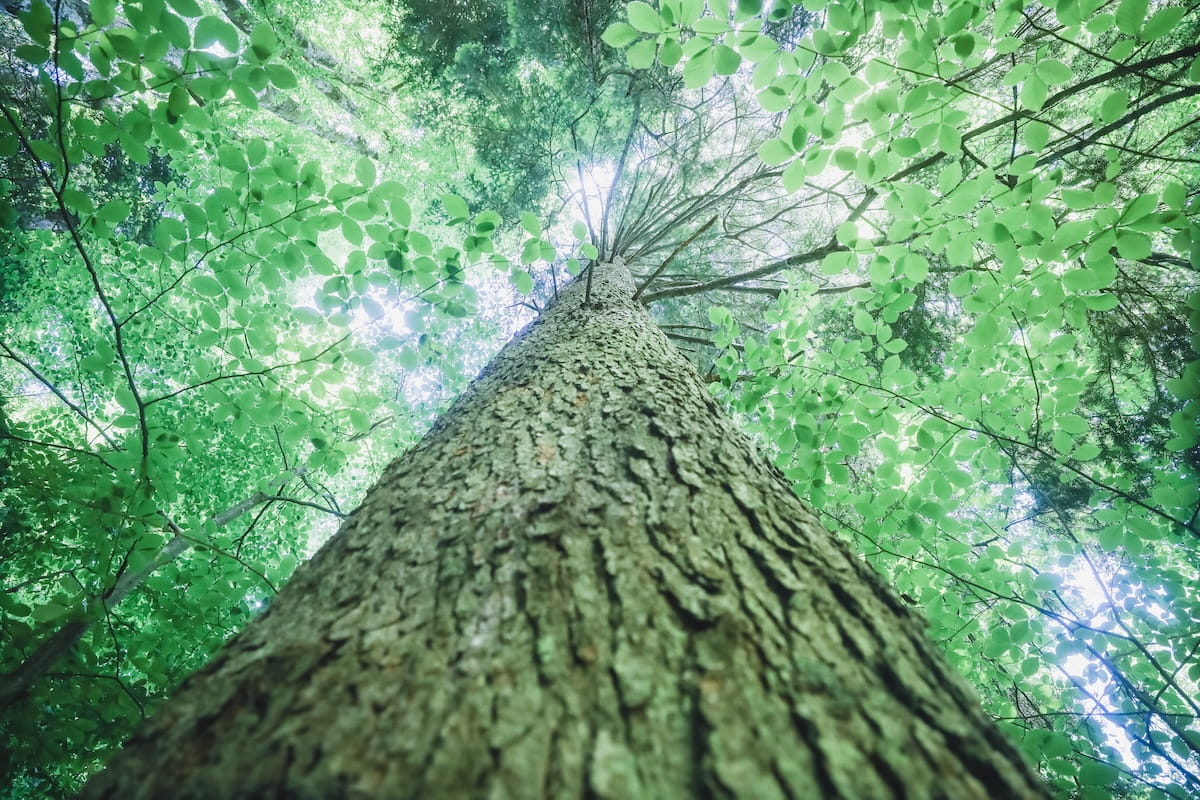
UNESCO-protected ancient beech forests of Strâmbu-Băiuț, Maramureș, Romania
Q: Why is it so vital to emphasize a scientific approach to forest therapy?
Walter Ubelhart: In Romania, there is a traditional saying that “the forest is the Romanian’s brother,”meaning people often take nature for granted because a forest is always nearby. If you just tell someone to walk in the woods to feel better, they are often skeptical. You must back it up with quantitative, scientific measurements. Just as the existence of invisible radio waves was only accepted once the radio was invented to detect them, we need specialized equipment to prove the invisible physiological benefits of the forest.
Our long-term goal is to integrate silvotherapy into mainstream medicine and academic curricula as a core component of integrative medicine—the medicine of the future. It is also an incredible economic alternative for rural communities like Băiuț to transition away from closed-down mining industries and move into sustainable health tourism and balneology.
Q: You hosted several notable international speakers this year. Could you tell us about their contributions?
Walter Ubelhart: Yes, we had a highly documented presentation from an Israeli researcher, Prof. Miriam Reiner, titled “Light, Physiology, Cognition, and Emotion. Mechanisms and evidence: from spectral input to brain and behavioral outcomes”. Using highly sophisticated equipment, her work mapped how natural forest light affects the retina and brain compared to the harmful blue light of digital screens, demonstrating the immense cognitive and physiological benefits of the forest’s natural yellow light spectrum.
We also explored the global expansion of these practices, featuring insights into “Forest Bathing for Chronic Illness” by Prof. Dr. Kirsten McEwan from the University of Derby (England), which demonstrated the clinical value of nature-based interventions.
Additionally, Alex Gesse from the Forest Therapy Hub (Barcelona, Spain) presented “The Global Landscape of Forest Therapy: Shaping the Future of the Nature-Based Health Industry”. He and his colleague led our practical tracks, bringing world-class European expertise to the field. We also discussed the Scandinavian “72-hour concept,” which shows that an individual needs to spend 72 hours in a changed environment for the body to fully absorb and adapt to the therapeutic benefits of nature.
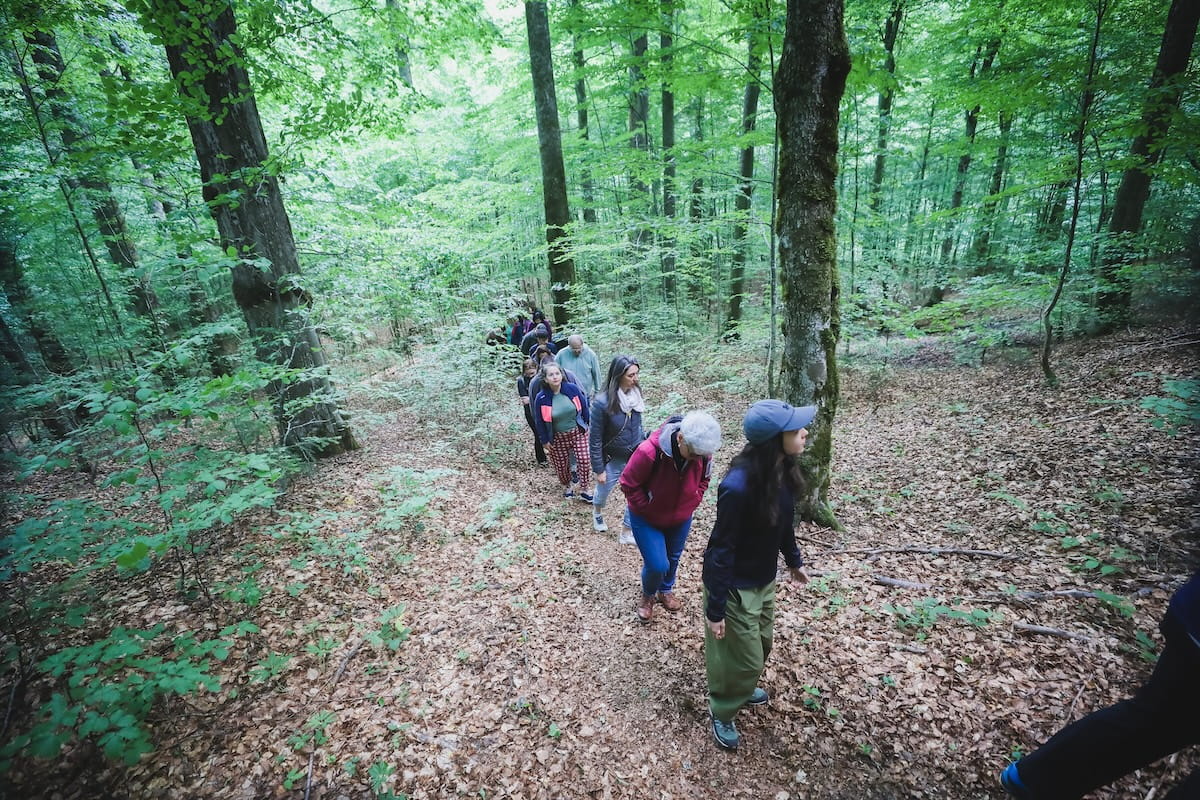
Forest Bathing session guided by Prof. Dr. Kirsten McEwan, in the UNESCO-protected ancient beech forests of Strâmbu-Băiuț, Maramureș, Romania
Q: A major highlight of this edition was the participation of the Center for Complexity Studies team. How did their work impact the symposium?
Walter Ubelhart: Their contributions were absolutely, incredibly interesting. Frankly, the CSC team elevated the entire symposium to a much higher quality and scientific level than what we achieved during our inaugural event last year.
During our previous edition, our discussions were strictly limited to standard, baseline physiological changes resulting from forest therapy. The CSC team, however, pushed the boundaries into the future. The presentations delivered by Drd. Emil Canciu, “Health, Applications in Forest Therapy” and Prof. Dr. Florin Munteanu, “The Forest as a Living Sensor”, transformed our perspective.
By introducing concepts of complexity theories, the Gaia hypothesis, artificial intelligence, and advanced sensorality, they brought progressive, forward-looking research to the table. They demonstrated how the forest can be viewed as a living, interconnected sensor network, and showed how these complex natural systems can be measured, quantified, and analyzed using modern technology. This sophisticated approach added immense scientific quality and academic weight to the symposium, opening up vital pathways for future research. I am deeply grateful for their participation and look forward to our continued collaboration.
Interview by Anca Berlo | 30.05.2026
