Exploratory Research in a Transdisciplinary Context: The “Scientific Jam Session” Concept @STE 2026
Vision & Methodological Leadership: Dr. Eng. Florin Munteanu
Implementation Team: Cristina-Dinu Popa, Anca Berlo, Emil Canciu, Eugen Danciu.
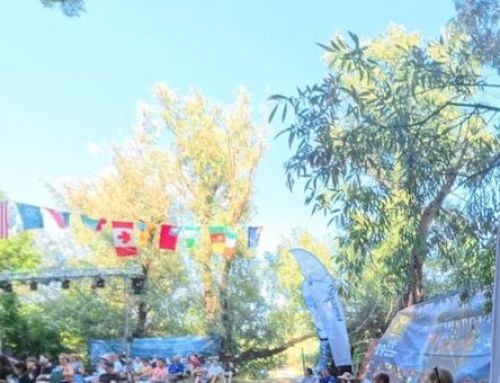
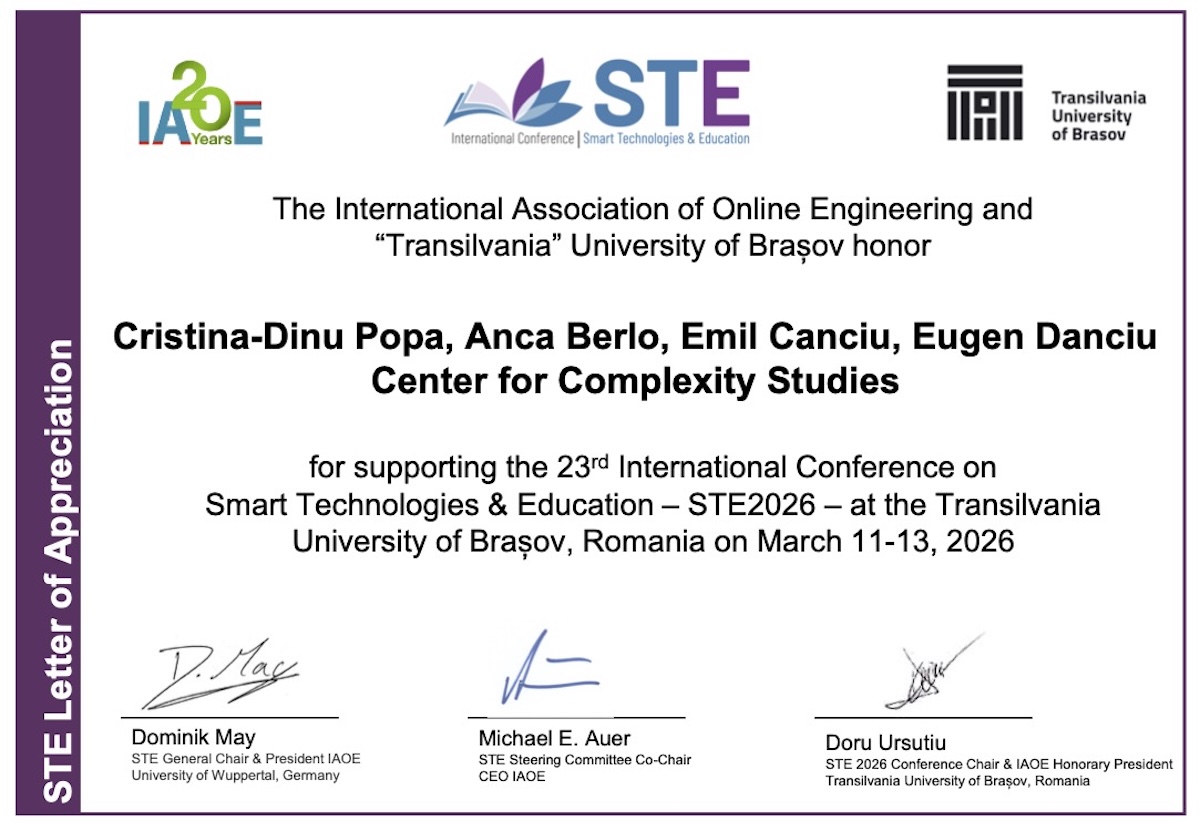
Following our active involvement before, during, and after the 23rd International Conference on Smart Technologies & Education (STE2026, March 11–13, 2026, at Transilvania University of Brașov), the Center for Complexity Studies (CCS) team—comprising Cristina-Dinu Popa, Anca Berlo, Emil Canciu, and Eugen Danciu—was officially awarded a post-event Letter of Appreciation. This distinction was presented on behalf of the organizing institutions by Dominik May (President of the International Association of Online Engineering – IAOE), Michael E. Auer (Founder & Chair of IAOE), and Doru Ursuțiu (STE2026 Conference Co-Chair, Transilvania University of Brașov).
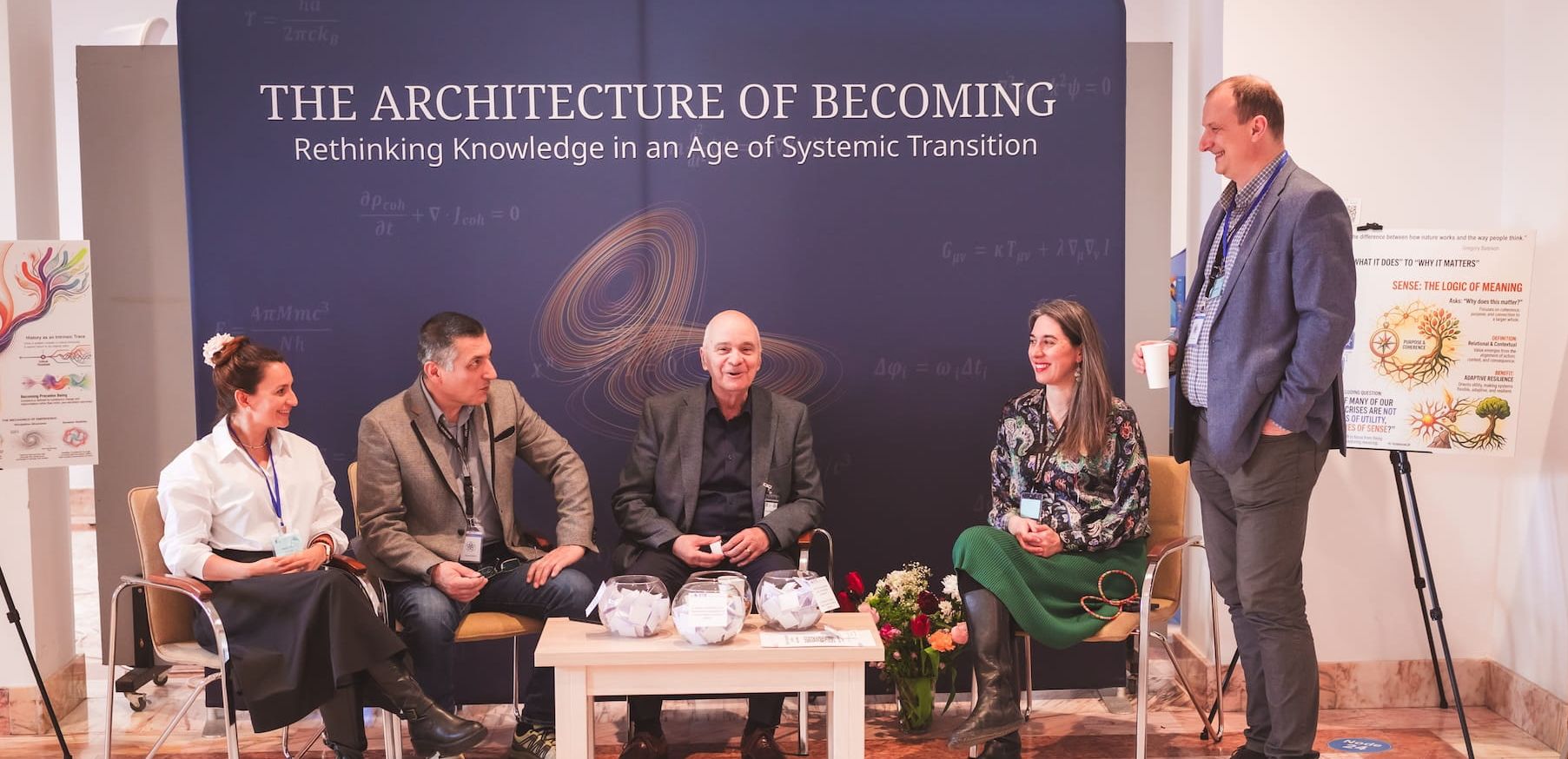
This recognition was granted as a result of CCS officially launching and facilitating a novel methodology—the Scientific Jam Session—conceived and initiated by Dr. Eng. Florin Munteanu. Beyond logistic support and exhibition activities, our sustained contribution highlighted CCS’s landmark creative, conceptual, and methodological impact within the international academic community.
©️ Center for Complexity Studies
Why a “Scientific Jam Session”?
True paradigm shifts rarely stem from the orderly presentation of pre-packaged, finalized results. In an era where information accumulates faster than our collective ability to integrate it coherently, hyper-specialization leads to knowledge fragmentation.
As outlined in the synthesis brochure of the project (available in the CCS online library), the Scientific Jam Session goes far beyond a conventional workshop:
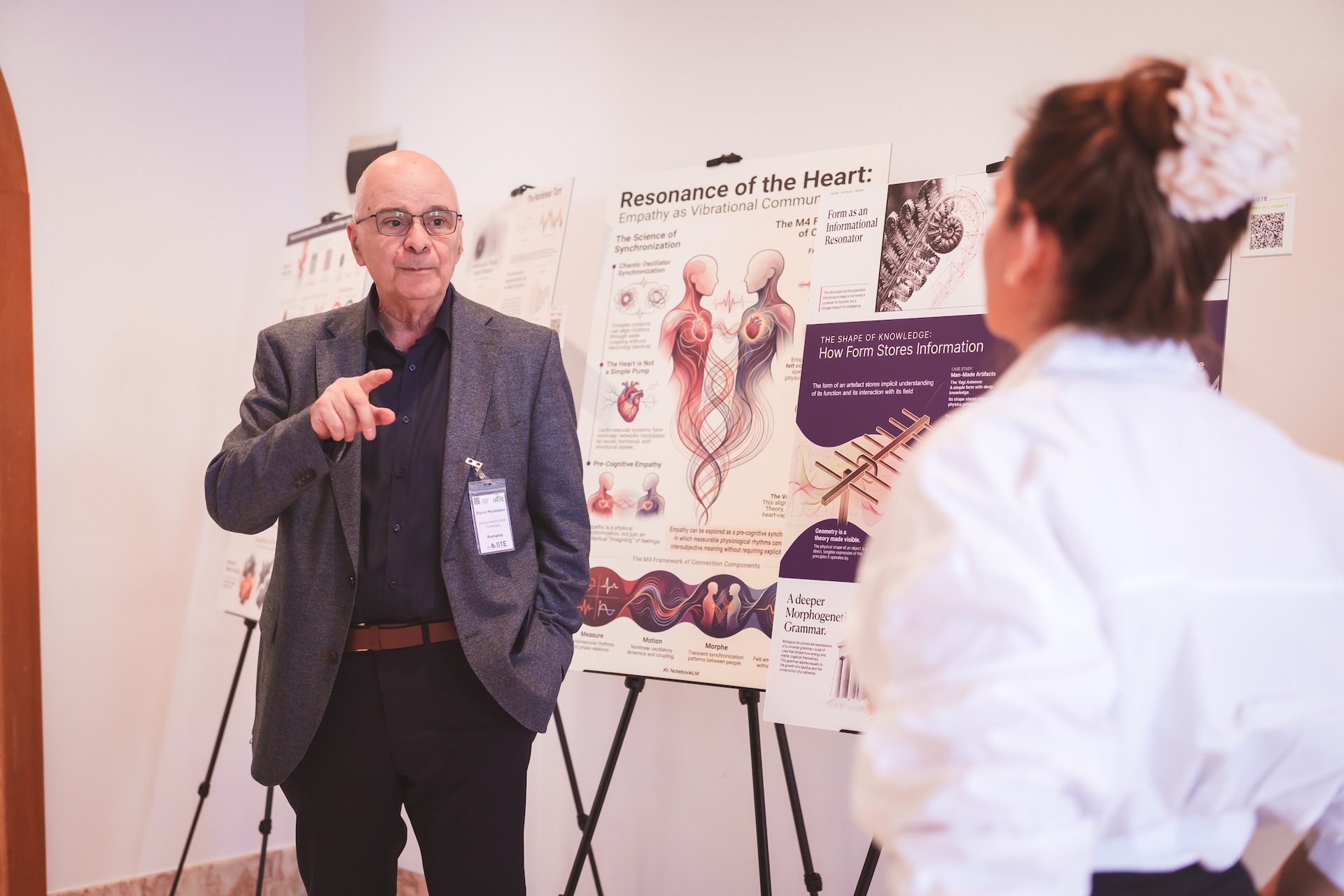
- Structured Openness: It is not improvisation without rigor, but a disciplined encounter across fields—where engineering meets biology, physics meets epistemology, and computation meets ontology.
- The Primacy of Fertile Questions: The focus shifts from defending polished slides to reformulating core assumptions and asking better questions, temporarily suspending rigid disciplinary reflexes to cultivate a legitimate space for exploratory inquiry.
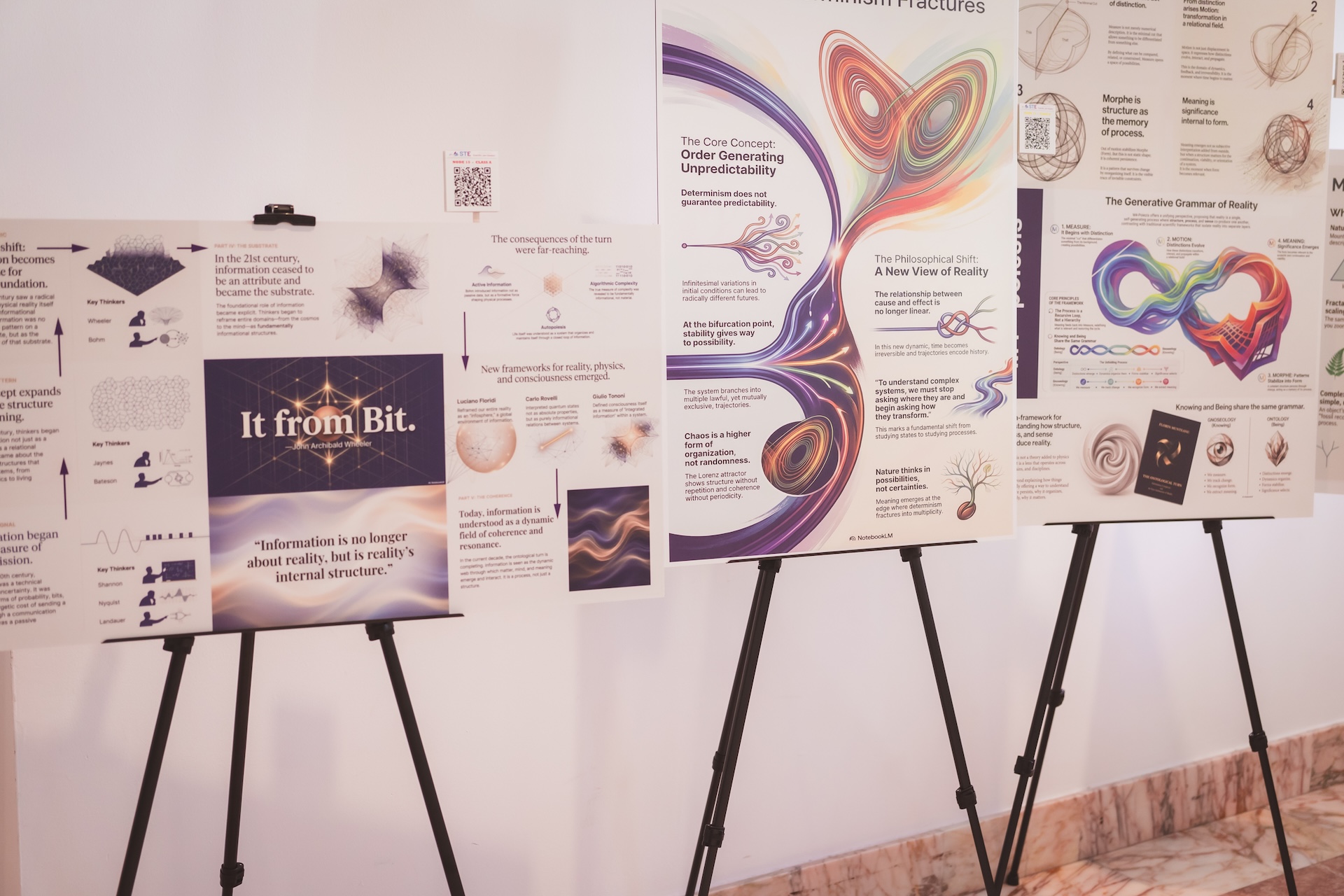
- Participatory Cognitive Environment: Participants step away from passive audience roles to interact within an active cognitive field—represented by the Atlas of 26 Conceptual Nodes—specifically designed to catalyze cross-disciplinary resonance.
For this methodology to truly function, we cultivate epistemic humility—the willingness to recognize the boundaries of our own disciplinary assumptions—alongside intellectual courage, the audacity to venture beyond established paradigms into uncharted conceptual territory.
©️ Center for Complexity Studies
How the Jam Session Works: Architecture & Epistemic Dynamics
The Scientific Jam Session operates as a participatory cognitive field where interaction is guided by explicit shared axioms and a modern form of Socratic maieutics (the art of eliciting hidden insights through structured dialogue). Rather than presenting finished answers, the session functions as a collaborative laboratory designed to bridge the growing epistemic rift between data collection, formal theoretical models, and human meaning.
By integrating the tools of practical philosophy, participants are trained to critically analyze assumptions, decode local and transcultural patterns of signification, and distinguish generative conceptual frameworks from rigid dogmas. The methodology cultivates:
- Intellectual Rigor and Flexibility: Developing the capacity to hold multiple working hypotheses simultaneously across different scales of complexity.
- Transdisciplinary Synthesis: Reconnecting the cycle of knowledge (Measure ->Motion ->Morphé/Form -> Meaning) to ensure technical advances remain grounded in systemic coherence.
Expected Outcomes: The primary output is not immediate optimization, but the emergence of novel conceptual frameworks, the reframing of complex problems, and the generation of seed research directions capable of driving genuine paradigm shifts.
©️ Center for Complexity Studies
Thinking Exercises: Focus Topics at STE2026
During the Scientific Jam Session at STE2026, participants engaged in collective thought exercises designed to test and demonstrate the methodology across cutting-edge exploratory topics:
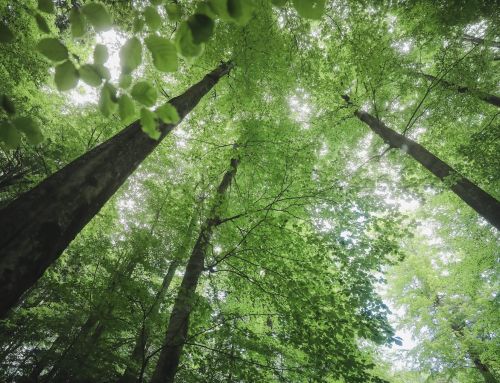
- Forest as a Living Sensor: Exploring planetary systemic resonance by modeling natural ecosystems as distributed, non-linear sensing networks.
- Ant Colonies & Seismic Anticipation: Analyzing collective coherence shifts in biological systems as potential indicators for complex environmental dynamics.
- Slime Mold & Chaotic Stabilization: Examining the coupling of nonlinear dynamics and living systems to understand emergent problem-solving and adaptive network formation.
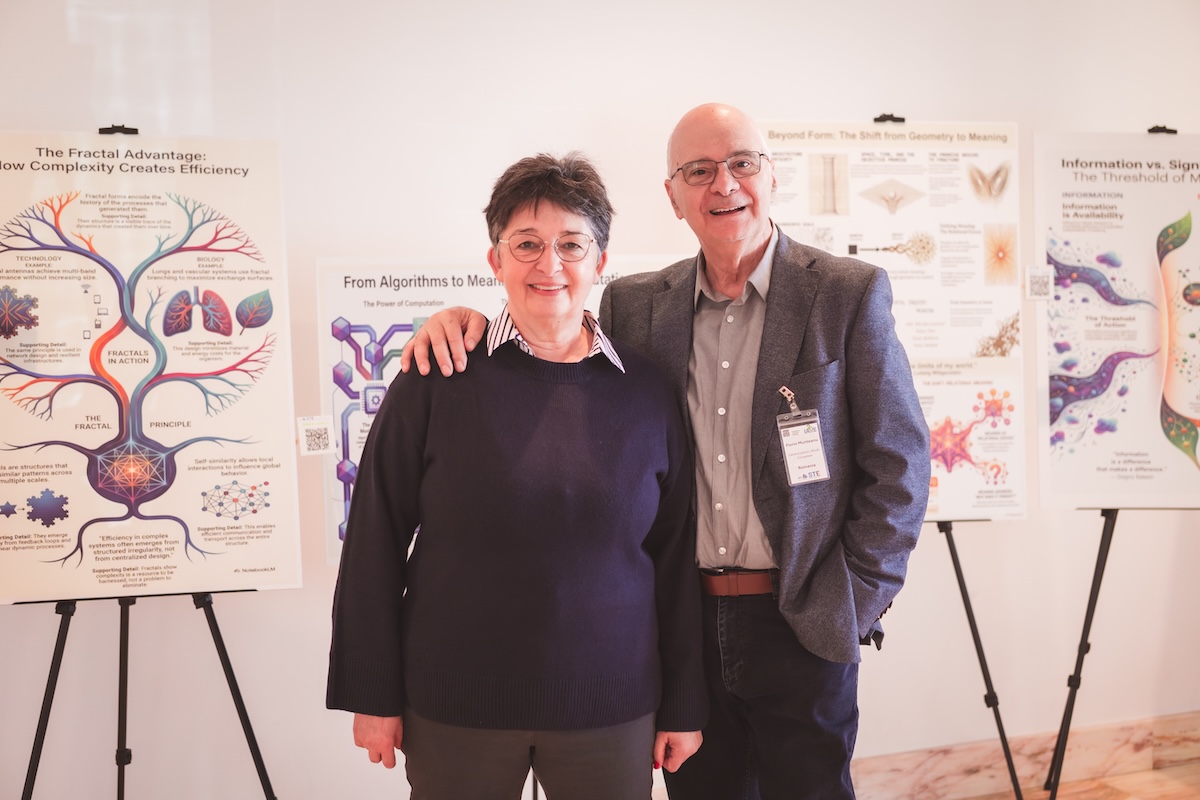
©️ Center for Complexity Studies | Cornelia Munteanu & Florin Munteanu, Co-founders, Center for Complexity Studies
Foundational Framework: Key Principles of the Transdisciplinarity Manifesto
To provide context for readers unfamiliar with this theoretical horizon, our methodology draws directly from the Manifesto of Transdisciplinarity formulated by quantum physicist Basarab Nicolescu. The Manifesto introduces a new orientation for modern science and culture based on several main ideas:
- Multiple Levels of Reality: Reality is not flat or single-layered. It consists of multiple levels (e.g., macroscopic, quantum, cybernetic) governed by different laws, where moving between levels breaks classical linear determinism.
- The Logic of the Included Middle: Moving beyond classical binary logic (A or non-A), transdisciplinarity introduces the T-state (a third state), allowing apparently contradictory or opposing ideas to coexist coherently across different levels of reality.
- Complex Systems and Non-Linearity: Nature and human cognition operate as open, dynamic, non-linear networks that cannot be fully explained through rigid reductionist methods.
- Transdisciplinary Education & Culture: Knowledge must cultivate “the whole human being”—integrating scientific rigor with artistic, social, and philosophical dimensions to address global, systemic challenges through shared planetary consciousness. This includes acknowledging the value of symbols and mythologies across diverse cultures, critically engaging with them to extract deeper meaning, foster mutual understanding, and employ them as powerful mediums of transformation.
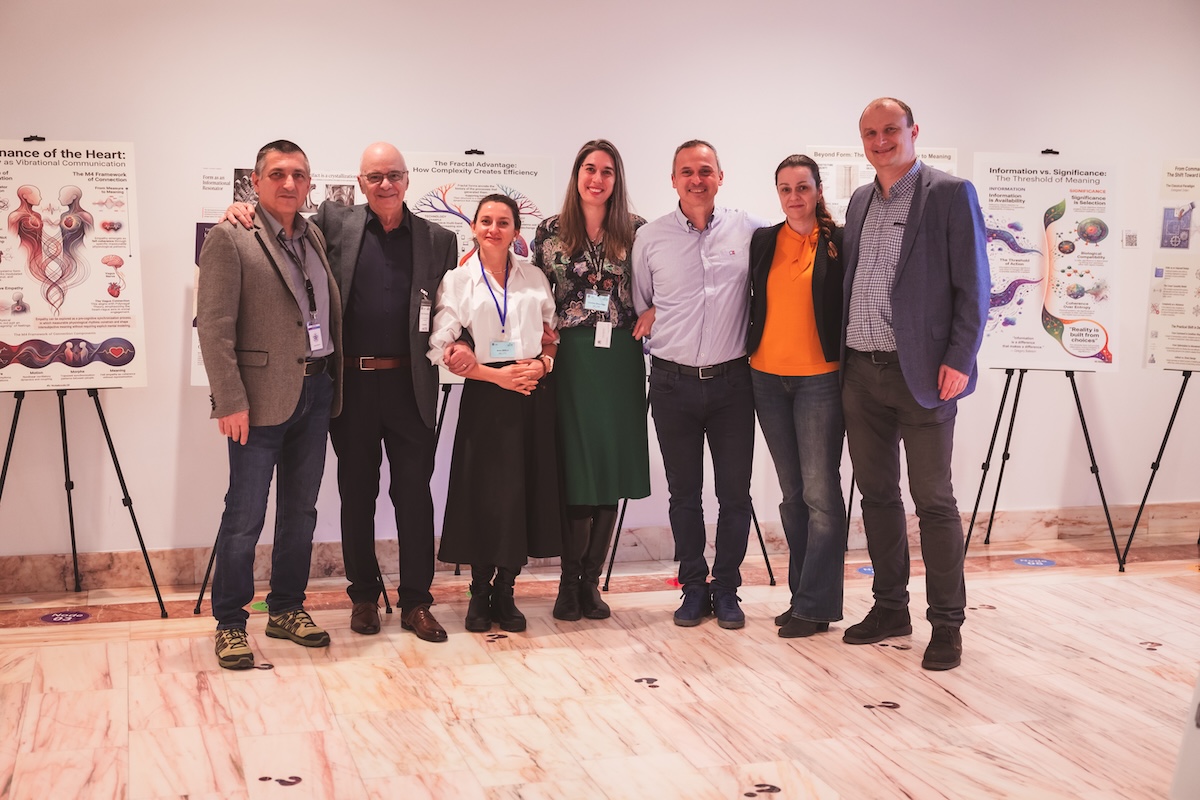
©️ Center for Complexity Studies | From left to right: Eugen Danciu, Florin Munteanu, Anca Berlo, Cristina Dinu-Popa, Dorian Lungu, Diana Canciu, Emil Canciu
The post-event recognition awarded by IAOE and Transilvania University of Brașov at STE2026 validates the team’s sustained effort and the international reach of this initiative. Moving forward, the primary commitment of the Center for Complexity Studies remains to refine, and continuously expand the Scientific Jam Session methodology in Exploratory Research as an original Romanian framework for fostering scientific creativity and transdisciplinary innovation across future international research collaborations.
On this occasion we would like to also thank all the other members of the Center for Complexity Studies who supported the delivery of the event.
Access the Documentation:
The complete document detailing the methodology launched at STE2026 can be accessed in the CCS Online Library.
The Charter of Transdisciplinarity adopted in 1994, at the First World Congress of Transdisciplinarity (Convento da Arrábida, Portugal, November 2-7, 1994) can be found on the CIRET website.
Other sources: International Conference on Smart Technologies & Education -STE 2026 website and International Association of Online Engineering website.