Beyond Walls and Disciplines: A Community Adventure in Exploratory Science at Atlantykron 2026
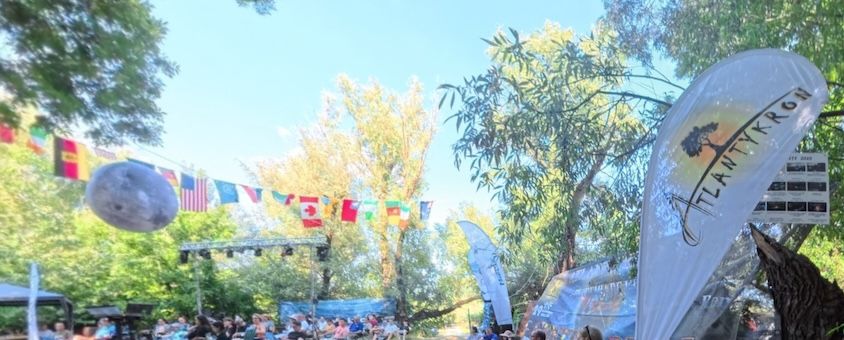
Between July 31st and August 7th 2026, at the 37th edition of Atlantykron, an enthusiastic Center for Complexity Studies (CSC) team arrived in Capidava, camping on Inelul de Piatră— an island on the right branch of the Danube. This unique destination is located nearly a kilometer downstream from the Capidava Fortress, which emerges above the water’s surface for only a few months each year when the river level drops.
Eager to meet and connect with new generations of open-minded thinkers in another shared adventure of knowledge, the Center for Complexity Studies team brought exploratory research to life on the island. Our aim was to provide a live demonstration of how exploratory research actually happens while cultivating the very being of the researcher. To achieve this, the CSC team set up a live, working exploratory laboratory on-site, engaging participants in a deep examination of how new knowledge emerges.
This effort unfolds within a unique gathering: a remarkably open-minded, imaginative, creative, and receptive community that grew organically on the foundation of a science-fiction mindset. Much like Isaac Asimov’s Foundation, Atlantykron functions as a symbolic, isolated sanctuary dedicated to lateral thinking and out-of-the-box exploration. Living close to nature while benefiting from cutting-edge technologies, participants gather here to contemplate and develop non-conformist ideas free from the immediate pressures of conventional systems.
At the Center for Complexity Studies our primary mission is to expand knowledge, recognizing that both essential instruments—the scientific framework and the Being of the researcher—require a simultaneous upgrade. We undertake both: philosophy trains the Being toward openness and critical thinking, while exploratory research and complexity science advance in the spirit of transdisciplinarity and across ontological levels of reality. As part of this conceptual shift, we acknowledge that the “house” we inhabit is not merely four walls of concrete, but our entire surrounding environment. It encompasses the living world, the animal kingdom, the geosphere, and the noosphere (as articulated by Dr. Ing. Florin Munteanu). Understanding our home beyond a simple lifeless habitat enables us to prevent it from becoming a foreign body in the universe, working instead toward the harmonious alignment of the conscious observer within the environment.
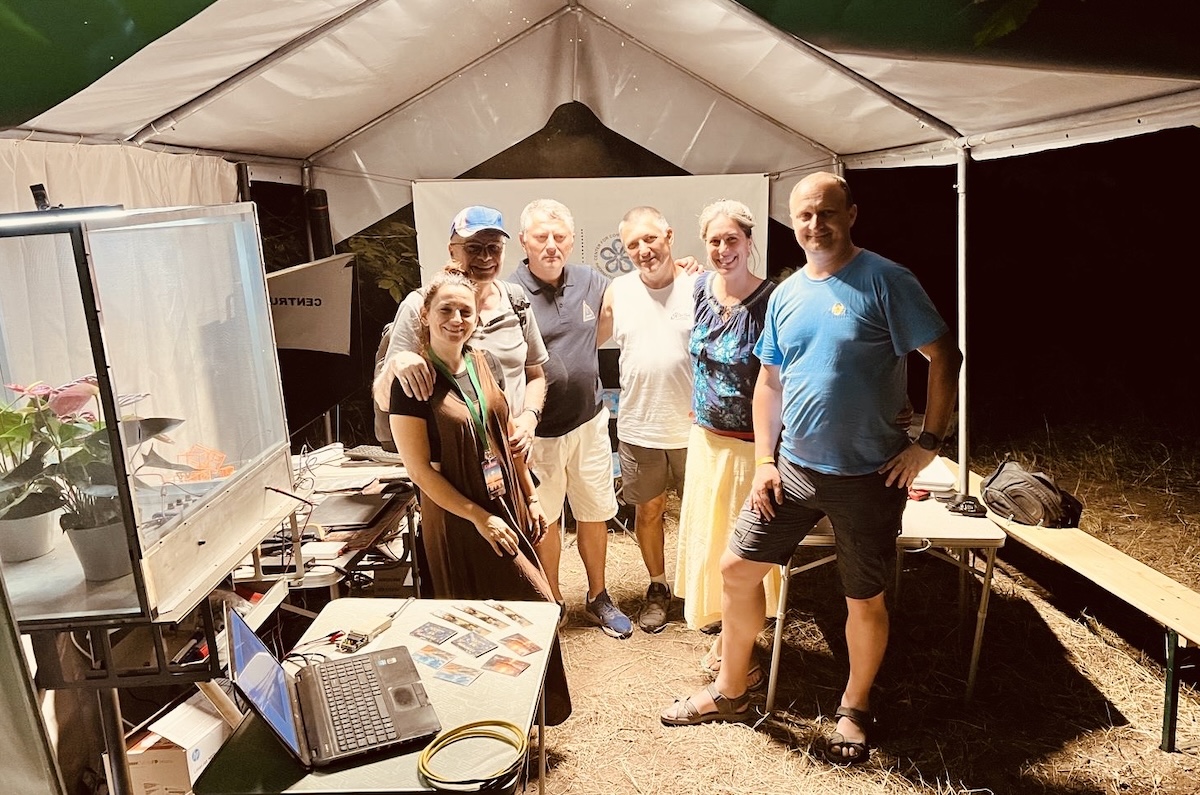
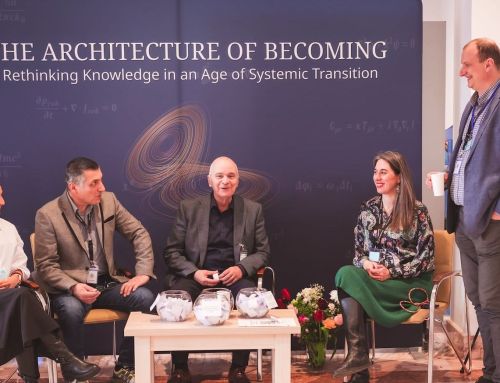
© Center for Complexity Studies | From left to right: Anca Berlo, Florin Munteanu, Sorin Repanovici – Atlantykron Academy Coordinator, Eugen Danciu, Cristina Dinu-Popa, Emil Canciu
Cultivating the Explorer’s Mindset: The Philosophical Laboratory
Facilitated by Anca Berlo under the umbrella of the CSC live science show, the Philosophical Café operated as a 5-session analytical laboratory for critical thinking and existential exploration. Grounded in the Exploratory Science Manifesto by Dr. Ing. Florin Munteanu, [available in the Library section] the sessions addressed a critical vulnerability in research: the tendency of unexamined mental dogmas and opinions (doxa) to fuse identity with ideas, causing defensive reactions when facing an epistemic break. To overcome these cognitive blockages, participants worked with the attitude of philosophy as a way of life (as formulated by Pierre Hadot), combined with the Stoic practice of watching over the self (Seneca) and the zetetic suspension of judgment (epohé).
The sessions systematically engaged binary logic (either/or). While recognized as useful up to a point—helping to break out of circular thinking and mental loops by revealing polar opposites through dialectics—binary thinking was ultimately transcended. By moving into interpretation, hermeneutics, and exploring spaces of possibilities and probabilities, the laboratory transitioned toward the inclusive logic of both/and (included third T) and transdisciplinarity.
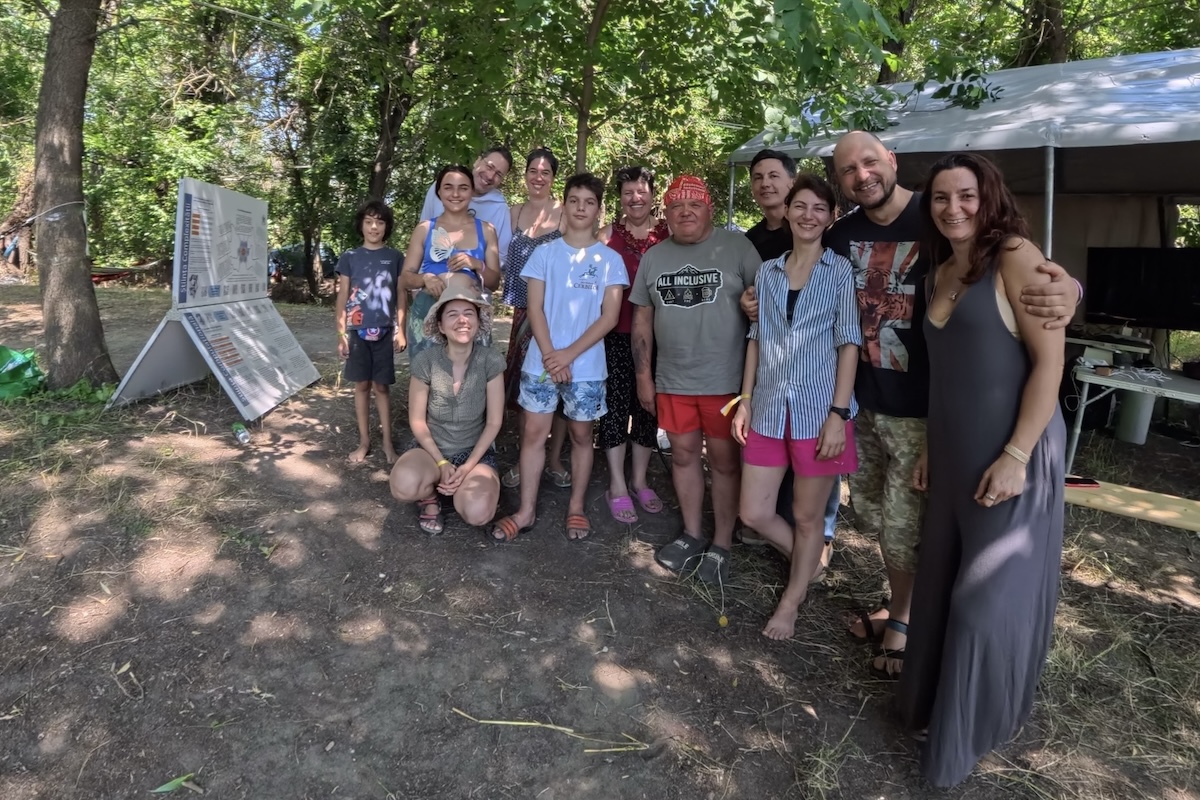
© Center for Complexity Studies | Philosophy Café participants, end of camp group photo
“Can We Talk to the Forest?” Live Laboratory & Science Show
Conceived and initiated by Eugen Danciu as an open-science initiative, the live experiment and science show “Can We Talk to the Forest?” unfolded as an immersive dialogue between technology, human presence, and the living world. To capture the delicate whisper of plant life, Eugen Danciu designed and built a custom Faraday cage (100 x 70 x 75 cm)—an electromagnetic shield crafted to isolate the organisms from ambient environmental noise, such as omnipresent 50 Hz grid interferences.
Working side by side in the field, Emil Canciu and Eugen Danciu operated the complex data acquisition hardware, continuously capturing and filtering subtle bioelectric plant signals in the 5–30 kHz range. The laboratory seamlessly transformed into an interactive science show as Cristina Dinu-Popa mediated live demonstrations using PlantWave technology. Here, participants were invited to touch the sensors directly, watching in amazement as the electric signals running through their own bodies altered the real-time melody and acoustic textures generated by the PlantWave application. The team extended these sonification experiments across a diverse range of local island life, translating bioelectric activity from tree leaves to wild forest mushrooms into soundscapes.
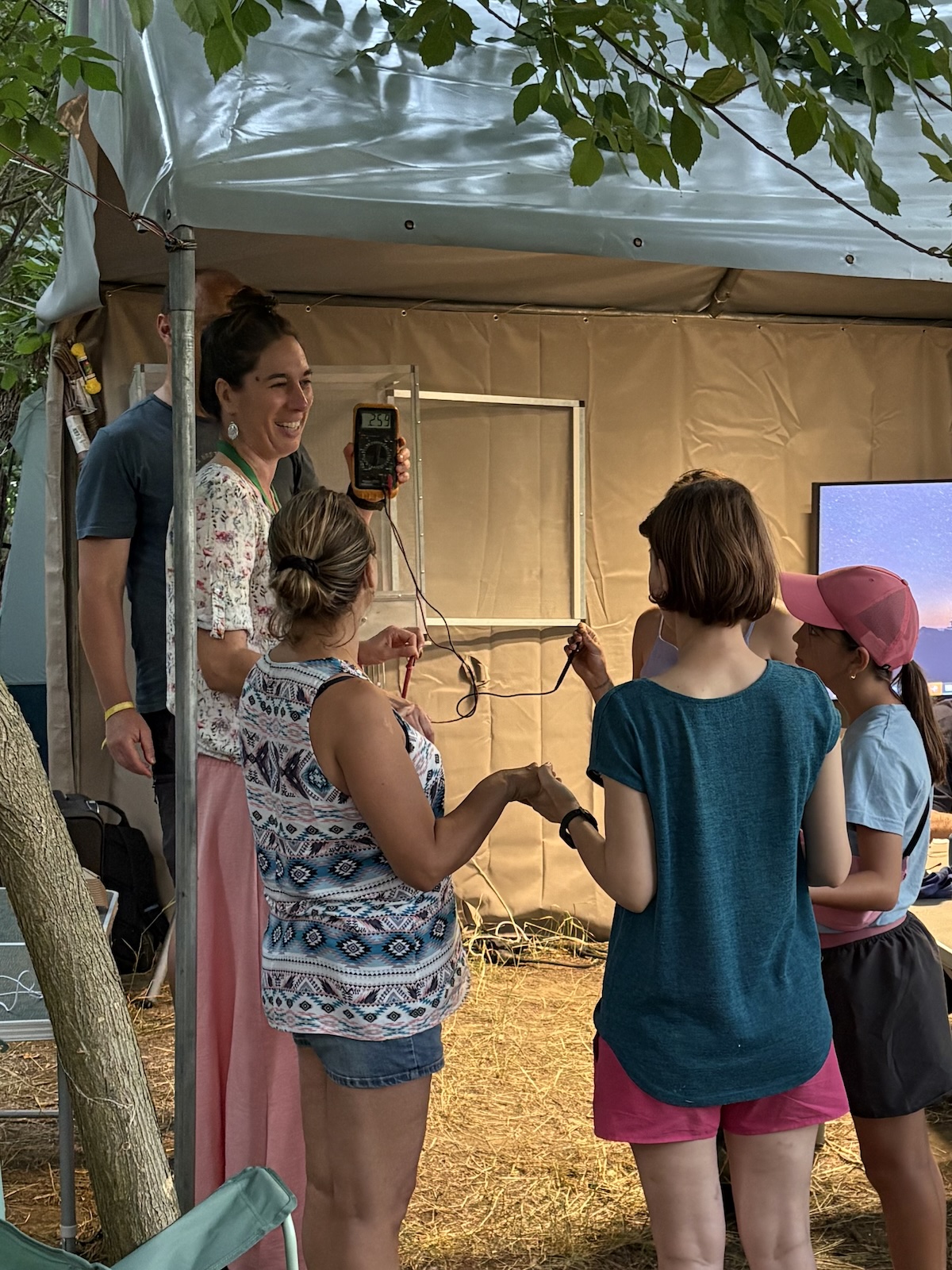
© Center for Complexity Studies | PlantWave and sonology experiment
The integrity of the experimental setup faced a moments-of-truth test when audience members raised healthy skepticism about true signal isolation. Meeting skepticism with open methodology, the team conducted a live comparative test on Thursday: demonstrating the messy electromagnetic interference picked up outside the Faraday cage versus the clean, distinct bioelectric signals recorded safely inside, proving the resilience of their field setup.
Dr. Ing. Florin Munteanu actively supported the experiment throughout its run, engaging directly with the public to unpack the underlying phenomena. He enriched the live demonstrations with complexity science insights and applied experience drawn from his research at the UNESCO Chair in Geodynamics at the “Sabba S. Ștefănescu” Institute of Geodynamics of the Romanian Academy and beyond.
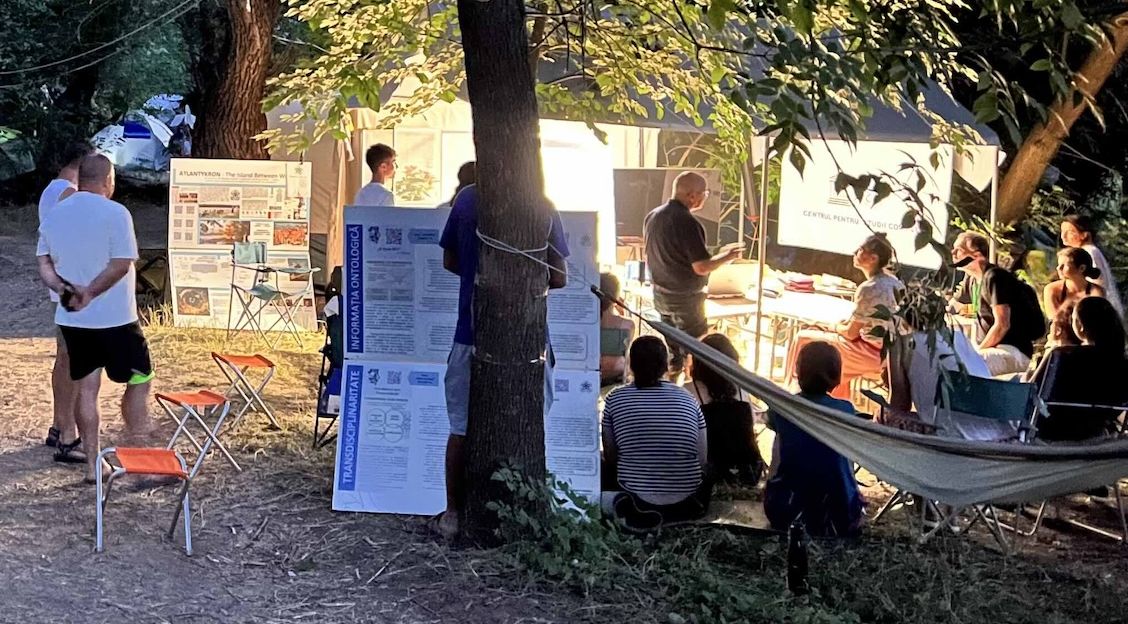
© Center for Complexity Studies | Late night complexity dialogues
Beyond the Ontological Turn: Exploratory Research and the Architecture of the Future
In his keynote conference, Dr. Ing. Florin Munteanu invited participants into a deeply personal, narrative journey through the evolution of complexity. For him, stepping onto the island was never about chasing abstract “dreams of the future”; it was about grounding real, tangible practice—bringing specialized measurement apparatus, an HC computer, and meticulously structured daily work plans directly into the field.
Speaking to a community defined by its science-fiction mindset and mental elasticity, Dr. Munteanu emphasized that true breakthroughs do not begin with polished, final answers, but with planting “buds of new ideas”—incipient seeds of thought allowed to take root organically. Marking 33 years of this ongoing island adventure—a journey originating well before 1993 through conferences, non-conventional technology projects, and exploratory media—the conference coincided symbolically with the 40th anniversary of Basarab Nicolescu’s formalization of transdisciplinarity. Sharing memories of his personal connection with Nicolescu, including the honor of delivering the reception address for his Doctor Honoris Causa at the University of Suceava, Dr. Munteanu wove transdisciplinarity into the very core of his message.
He guided the audience through the three foundational pillars of transdisciplinary thought:
- Levels of Reality, showing how our world is a nested hierarchy where every level is shaped by lower dynamics while remaining part of higher subsystems beyond our direct control.
- The Included Middle (Terțul Inclus), illustrating how binary “either/or” deadlocks—such as the historical divide between evolutionism and creationism—can be transcended through a leap in perspective that shifts consciousness into a higher synthesis.
- Complexity, distinguishing clearly between what is merely complicated (linear systems that can be dismantled and rebuilt piece by piece) and what is truly complex (non-linear, context-driven biological entities sensitive to initial conditions).
Dr. Munteanu urged researchers to venture into the uncharted “space between disciplines”—a territory left unmapped by traditional schooling, where original research niches and entirely new questions reside. Frame by frame, he reflected on his decades of experience as a continuous “film” rather than isolated milestones, reminding everyone that Atlantykron serves as an Asimovian sanctuary for lateral thinking and quiet decantation.
The future, he insisted, is not something we passively await or calculate through probabilities; it is built in an open space of possibilities forged through daily human negotiation and collective action: “not how we will live in the future, but how, through what we do today, we construct it.” Ultimately, he closed with a call to rediscover wonder as the true spark of knowledge—emphasizing that every philosophical inquiry must be authentically felt and lived from within, far removed from copied thinking.
Island Life, Artforms, and Community Synergy
During this edition, the Atlantykron organizers—among whom Atlantykron Academy coordinator Sorin Repanovici – honored Dr. Ing. Florin Munteanu for his 33+ years of extraordinary dedication to scientific education and for continuously elevating the conceptual horizon of the island community.
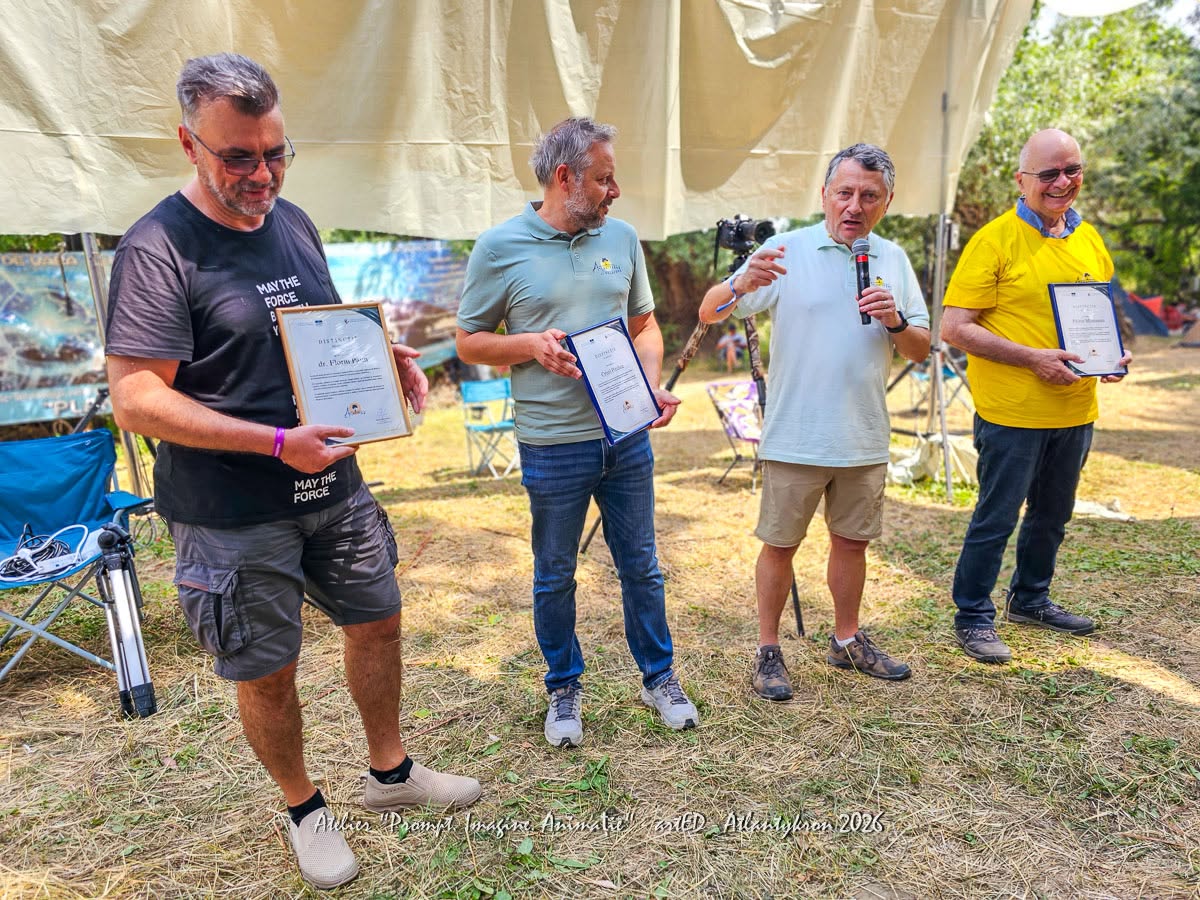
© Eugen Demetercă | From left to right: Florin Păun, Cristian Pitulice, Sorin Repanovici, Florin Munteanu
Beyond our dedicated laboratory work, life on the island offered a rich tapestry of communal creativity, shared learning, and artistic immersion. Facing the summer’s high temperatures, we found welcome relief in the shade of the trees and took refreshing dips in the Danube to cool off. The island’s unique synergy allowed us to cross paths with diverse disciplines and explore various hands-on workshops, from crafting, to gaining practical wilderness skills, writing and world-building to creative experiments and environmental awareness modules.
This year, we were also thrilled to host the hands-on workshop led by Eugen Demeterca, Prompt. Image. Animation, right within our space. Designed for those brimming with visual ideas but seeking the means to bring them to life, the session turned AI algorithms into brushes, cameras, and film lenses, allowing participants’ words to become prompts that birthed the first frames of their filmmaking journeys—taking them from a single thought to dynamic film sequences almost in the blink of an eye.
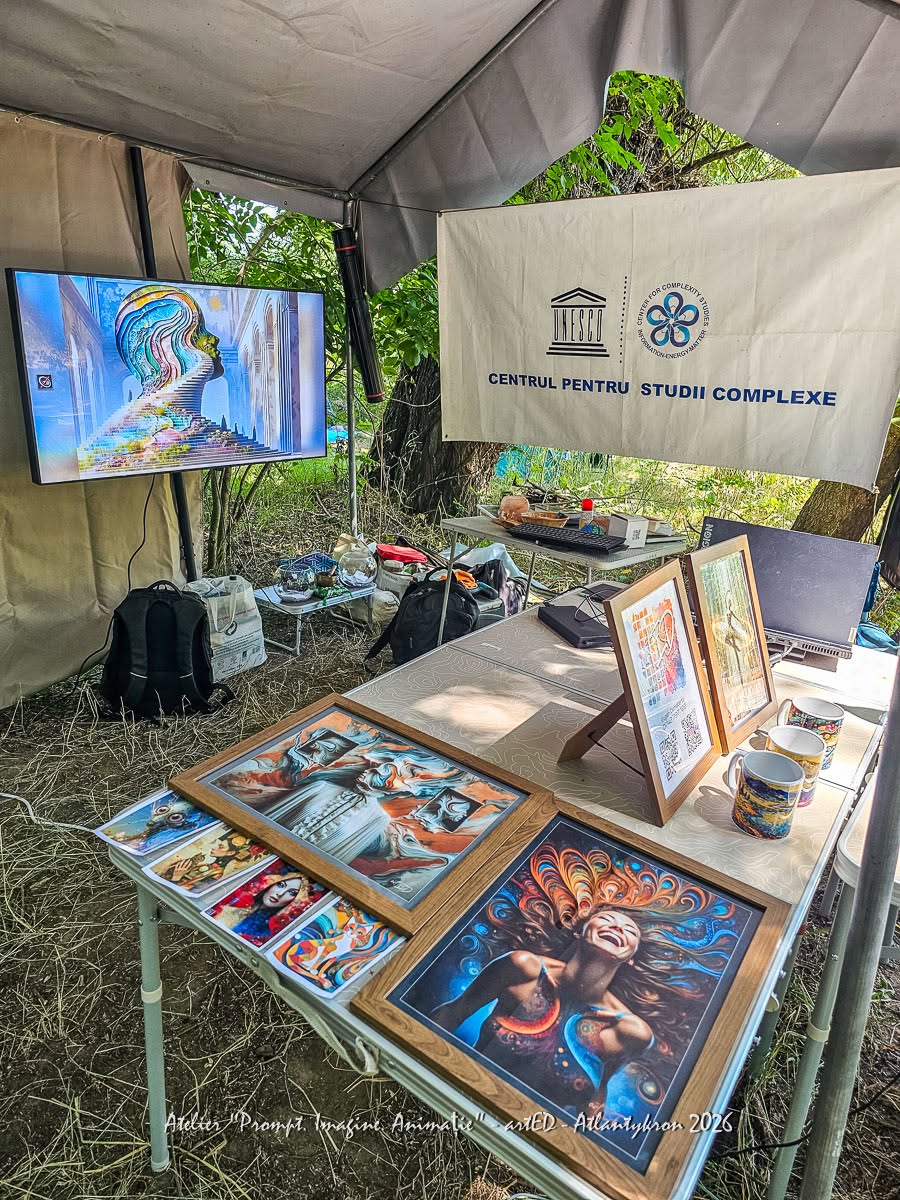
© Eugen Demetercă | Atelier Prompt.Imagine.Animație
Art and music continuously lifted the community’s spirits: we marveled at the captivating BASM painting exhibition by Gabi Grosu and enjoyed unforgettable musical performances, from the classic island favorites Sigur că Da to the incredible energy of Dora Gaitanovici, a welcome new presence on the island. Living, contemplating, and learning together in nature transformed these shared moments into a true celebration of community spirit, lateral thinking, and mutual inspiration.
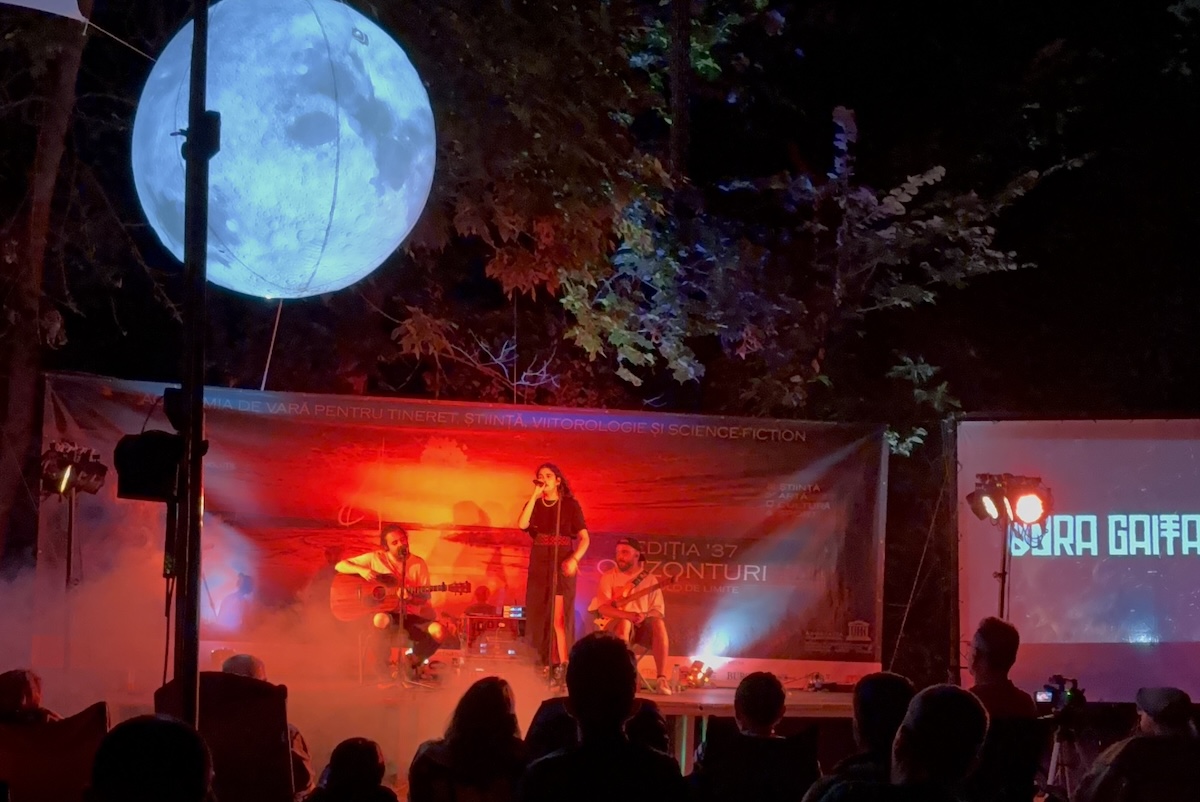
© Center for Complexity Studies | Dora Gaitanovici show
Looking ahead
The work of the Center for Complexity Studies continues to unfold across all levels: experiments with plant bioelectric signals and slime mold are advancing into more controlled environments, while our ongoing philosophical inquiries continue to deepen the mindset of the researcher. Looking into 2026, we remain deeply excited for the year ahead, eager to further expand the boundaries of being, exploratory science and transdisciplinary research.
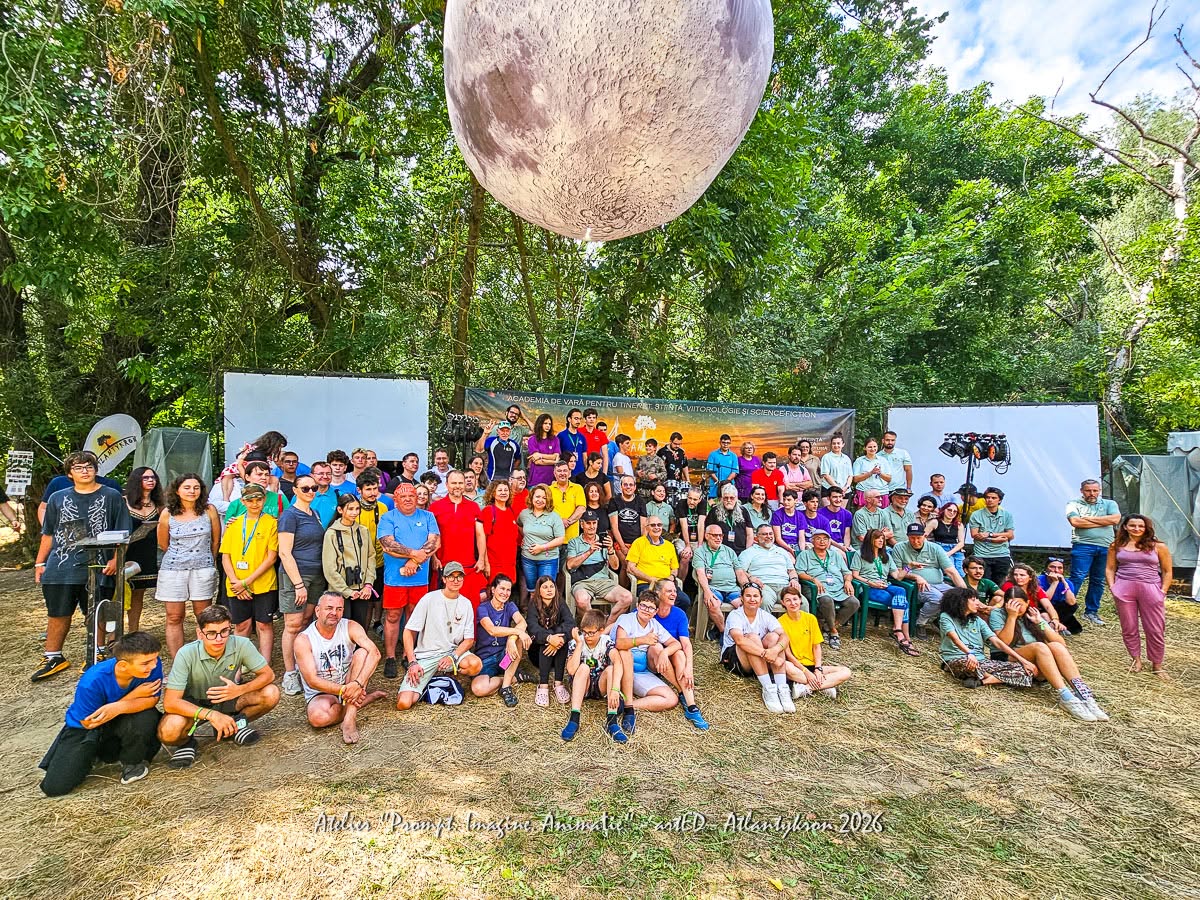
© Eugen Demetercă | Atlantykron 2026 Organising team, guests and instructors